Generative AI Spots the Cracks: The Next-Gen AWS Resilience Hub Is Here
Hey everyone, it's me! Today I've got good news for anyone running infrastructure. There's a new setup where generative AI actively helps you build systems that stand up to failure. Let's dig in!
AWS Blog aws.amazon.com
What was announced?
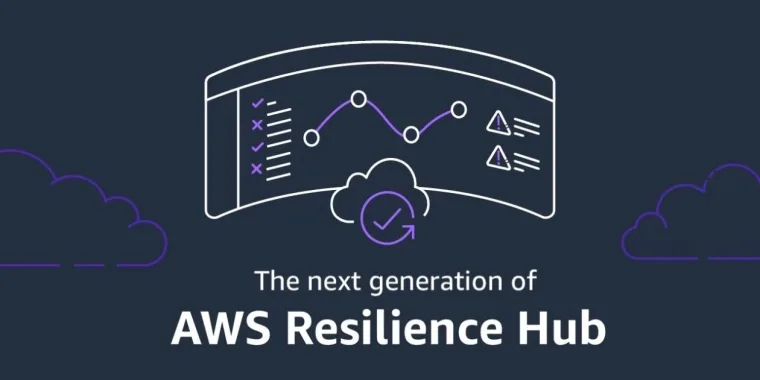
On the AWS Blog, AWS announced that the next generation of AWS Resilience Hub is now generally available (GA). The announcement date is May 28, 2026.
AWS Resilience Hub is a service for assessing and managing the resilience of your applications. This time it has been substantially redesigned, combining the power of generative AI with structured management built for SREs and development teams.
The story so far
Organizations running many applications tend to share the same pain points:
- How to set consistent resilience standards across the whole portfolio
- How to measure progress toward their goals
- How to prove that applications actually meet expectations
Until now, teams used inconsistent approaches and tools, and even sharing whether an app behaved as expected was a struggle. This update tidies all of that up.
What changes
The headline feature is that resilience policies are now modular. Instead of applying one rigid, all-in-one policy, you can assemble only the requirements that actually matter for your app. The original post puts it like this:
construct policies by selecting the requirements that matter to your application, such as service level objective (SLO), multi-AZ and multi-Region disaster recovery, and data recovery requirements.
So you can freely pick things like SLOs, multi-AZ and multi-Region disaster recovery, and data recovery requirements per application. That makes it much easier to set standards that fit.
The other big one is generative AI-powered failure mode analysis. It evaluates your services against your defined policies, AWS Well-Architected best practices, and the AWS Resilience Analysis Framework.
assessments that analyze your services against your defined resilience policies, AWS Well-Architected best practices, and the AWS Resilience Analysis Framework.
By doing this, it surfaces potential failure modes ahead of time and even gives you concrete recommendations to fix them. For SREs, that sounds like a very reassuring sidekick!
Dive Deep
Let's peek a bit further inside.
Application modeling gets a business lens Now you model things as systems (business applications), user journeys (critical business paths), and services (deployable units bundling AWS resources, code, and observability). The point is you capture things by business importance, not just technical layout.
Automatic dependency discovery By analyzing DNS query logs, it automatically finds the AWS services, internal endpoints, and third-party dependencies you rely on. The post notes it can even reveal unexpected cross-Region calls or critical third-party dependencies you didn't realize you had. Great for avoiding the "wait, we depended on that?" moment.
Manage the whole organization at once It integrates with AWS Organizations so you can manage resilience across the entire organization from a single delegated administrator account, instead of dealing with accounts one by one.
How you use it Roughly, the flow goes like this:
- Configure resilience policies
- Create systems and services
- Enable dependency discovery
- Run failure mode assessments
- Review the findings, then either fix them or mark them as not applicable
Pricing and availability Pricing uses a new service-based model that includes two failure mode assessments per service per month, with automated dependency assessment as an option. It's generally available in AWS commercial Regions where Resilience Hub is offered, and there's a free trial, so it's easy to try out.
For existing users, there are migration APIs that convert previous assessment policies into the new resilience policies and map older applications onto the new architecture.
Wrap-up
- The next-generation AWS Resilience Hub is now GA (via the AWS Blog)
- Resilience policies are now modular, so you pick only the requirements you need
- Generative AI analyzes failure modes against your policies, Well-Architected, and the Resilience Analysis Framework, with recommendations
- Dependencies are auto-discovered from DNS logs, and AWS Organizations enables org-wide management
- Pricing includes two assessments per service per month, it's live in commercial Regions, and there's a free trial
I think this one lands hardest for SREs and infrastructure folks who wrestle with resilience design and operations every day. While the free trial is around, it's well worth seeing what it turns up on your own apps!